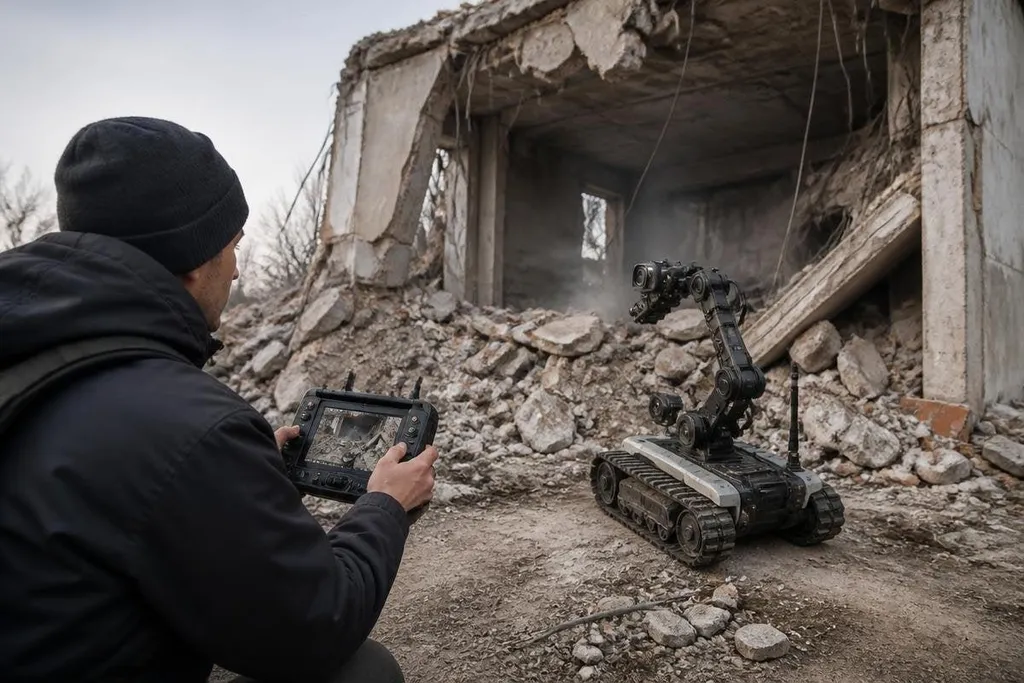
A rescue robot can enter a damaged building, send back video, and check spaces too risky for a person. The business opportunity sits around that work: selling machines, remote operation, training, data, and repairs to teams that need safer searches.
Quick read
- Thermal cameras can help teams find heat sources through smoke or darkness.
- Remote operation keeps people away from unstable floors, fire, and toxic air.
- Service contracts may matter more than the robot sale itself.
The first sale is safer access
Rescue teams often need information before they send people inside. A tracked robot with a camera can move through rubble, inspect rooms, and send live video to an operator outside the hazard zone.
That creates a market for machines built around specific jobs. A fire service may need heat sensing and a water hose. A search team may need a small crawler that fits through a narrow gap. A mine operator may need gas sensors, lights, and a radio link.
The buyer is paying for access to useful information. The robot must keep moving, keep its connection, and give the team a clear view of what lies ahead.
A long list of sensors matters less if the operator cannot control the machine in dust, heat, or poor visibility.
Services may bring steadier income
A rescue robot is not a normal equipment purchase. It needs trained operators, battery care, software updates, spare parts, and regular drills. A supplier can sell those services with the machine or run the robot for the customer.
Remote operation is one path. A specialist company could keep trained staff ready to guide a robot during a fire, flood, collapse, or industrial accident. That model gives a small emergency team access to skills it may not need every week.
Training is another opening. Operators must learn how to drive around broken concrete, read thermal images, manage a weak radio signal, and bring the robot back when its route closes. A training firm can build those skills around local buildings and real emergency plans.
The repair business matters too. Rescue work is hard on wheels, tracks, camera covers, cables, and battery packs. Suppliers that stock parts and fix damaged machines can earn money after the original sale, when the customer has a strong reason to get the robot working again.
Data turns a machine into a work record
Video, thermal images, gas readings, and location data can help an incident commander decide where people should go. The same files can support an insurance review, a safety report, or a later investigation, though each use needs clear rules for storage and access.
That creates room for software that sorts and labels robot data. A useful system could mark rooms already checked, show where a gas reading changed, or keep a time record of each pass through a site. It must show the source of each result so a human can check the machine's reading before acting on it.
A data service only earns a place in rescue work when teams can trace a robot’s record after a search. Robot 24 can add reporting on named rescue machines, field tests, and company activity, giving a founder a way to compare the software idea with the hardware it must support. Those records also show where the business case can fail.
Where the business can fail
Rescue work is irregular. A buyer may need a robot during a major incident but have little use for it between events. That makes storage, drills, parts, and operator time part of the purchase decision.
The robot also needs a clear limit. A camera view cannot tell a team that a damaged floor will hold weight. A thermal image can show heat, but it may not identify the source through every wall or material. Human teams still need to judge the scene.
A supplier must also plan for poor communications. Concrete, metal, smoke, and distance can weaken a radio link. A robot that loses control inside a damaged structure may become another object that rescuers must recover.
I’d start with service and training contracts, then sell the robot when the customer has a repeated job for it.
A buyer’s decision guide
Use this checklist before building or buying a rescue robot:
- Name the hazard: State the place, threat, and task the robot must handle.
- Pick the operator: Decide who drives it, who reads its sensors, and who can stop the mission.
- Test the link: Check control and video through the walls, rubble, smoke, or water found at the site.
- Price the full service: Include batteries, spare parts, training, storage, repairs, and software support.
- Set the handoff: Define when the robot's findings are checked by a person before anyone enters.
The strongest business case will come from a repeated task with a clear safety gain, such as inspection after an industrial accident or search inside unstable structures. The next question for each supplier is simple: how often will a customer use the robot, and who keeps it ready between emergencies?